
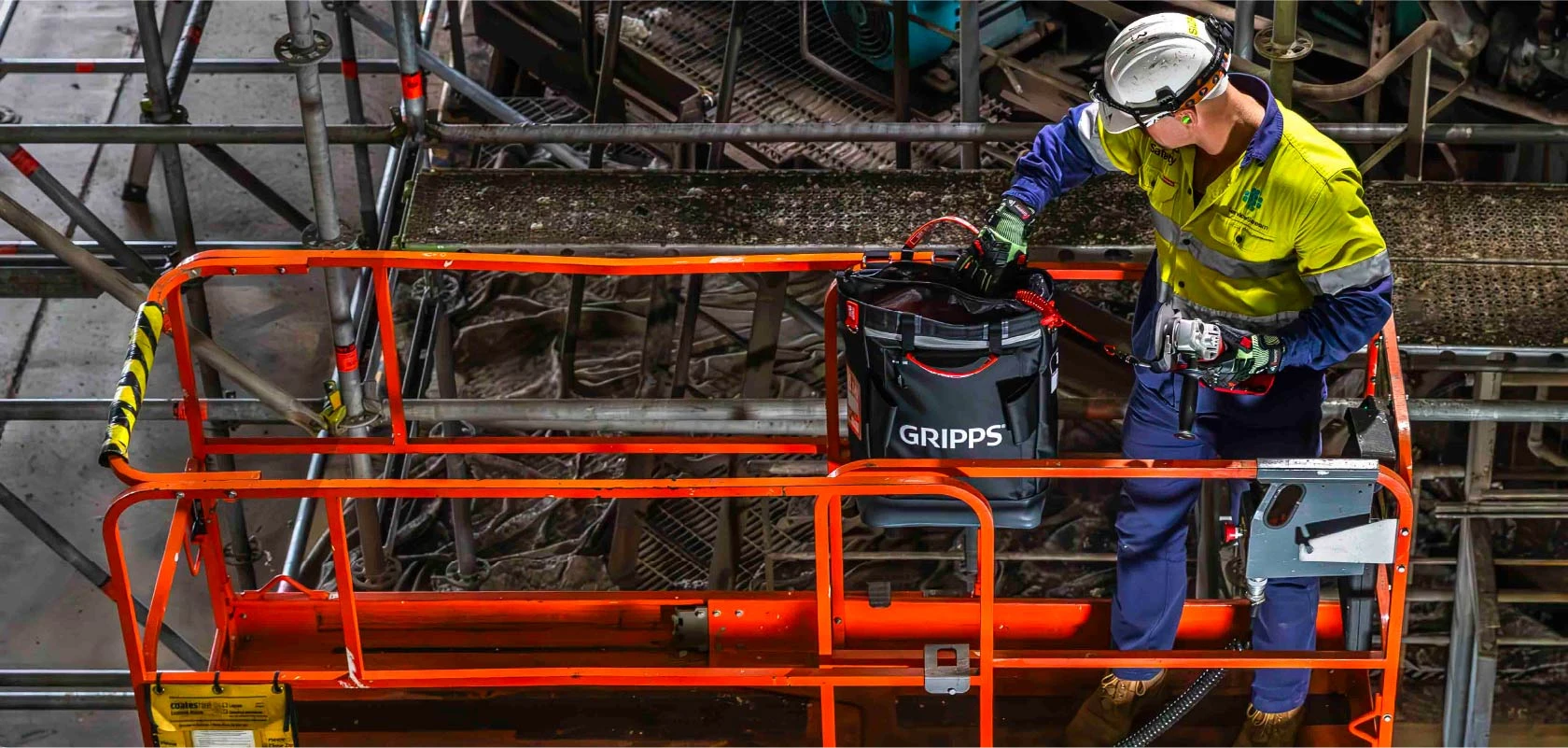
Begin with the exposure, before choosing products
Walk through the complete task and list what can fall. Include installed fixtures, hand tools, detachable batteries, loose fasteners, instruments, packaging and materials. Separate objects normally fixed in place from objects handled during the job. Review routine work as well as installation, shutdowns, maintenance and dismantling.
Map the routes and consequences
An item can fall over an edge, through grating, through a pipe penetration or during a transfer. Record the people and assets below each route, including adjacent work groups and equipment that could be damaged. Do not restrict the review to the worker’s immediate platform.
Remove the exposure where possible
Consider ground-level assembly, reducing unnecessary tools and parts at height, and changing the work sequence. Secure primary fixtures and correct defects. Where work at height remains necessary, review physical containment and retention alongside work procedures, access control and inspection.
Use complementary controls
Tool tethering follows a secured tool. Parts containment follows loose components. Gap protection addresses an opening. A barrier addresses an open edge. Secondary retention addresses suitable installed equipment. Select these controls around the actual routes rather than expecting one product family to address every exposure.
Define selection inputs
For tools and devices, record the complete weight, dimensions, model, reach and attachment possibilities. For installed equipment, record mounting and independent anchor details. For openings, record the geometry, surrounding structure and the smallest relevant object. Include environmental and electrical requirements.
Verify the arrangement before issue
Check the current documentation for the selected model. Confirm component compatibility, ratings, closures, anchors and installation. Walk through the task with the crew to identify snagging, restricted movement, awkward access and unsecured removable parts.
Maintain the programme
Define inspection responsibilities, issue and return checks, replacement criteria and how changes are reviewed. Reassess after modifications, changes in the tool set or a dropped-object event. Record what is actually installed and used so the plan remains traceable.
Turn the review into a product enquiry
Send PSC the task photographs, tool inventory and weights, fixture details or opening dimensions. Include the operating environment, required quantity and delivery location so the appropriate product configuration can be reviewed.