
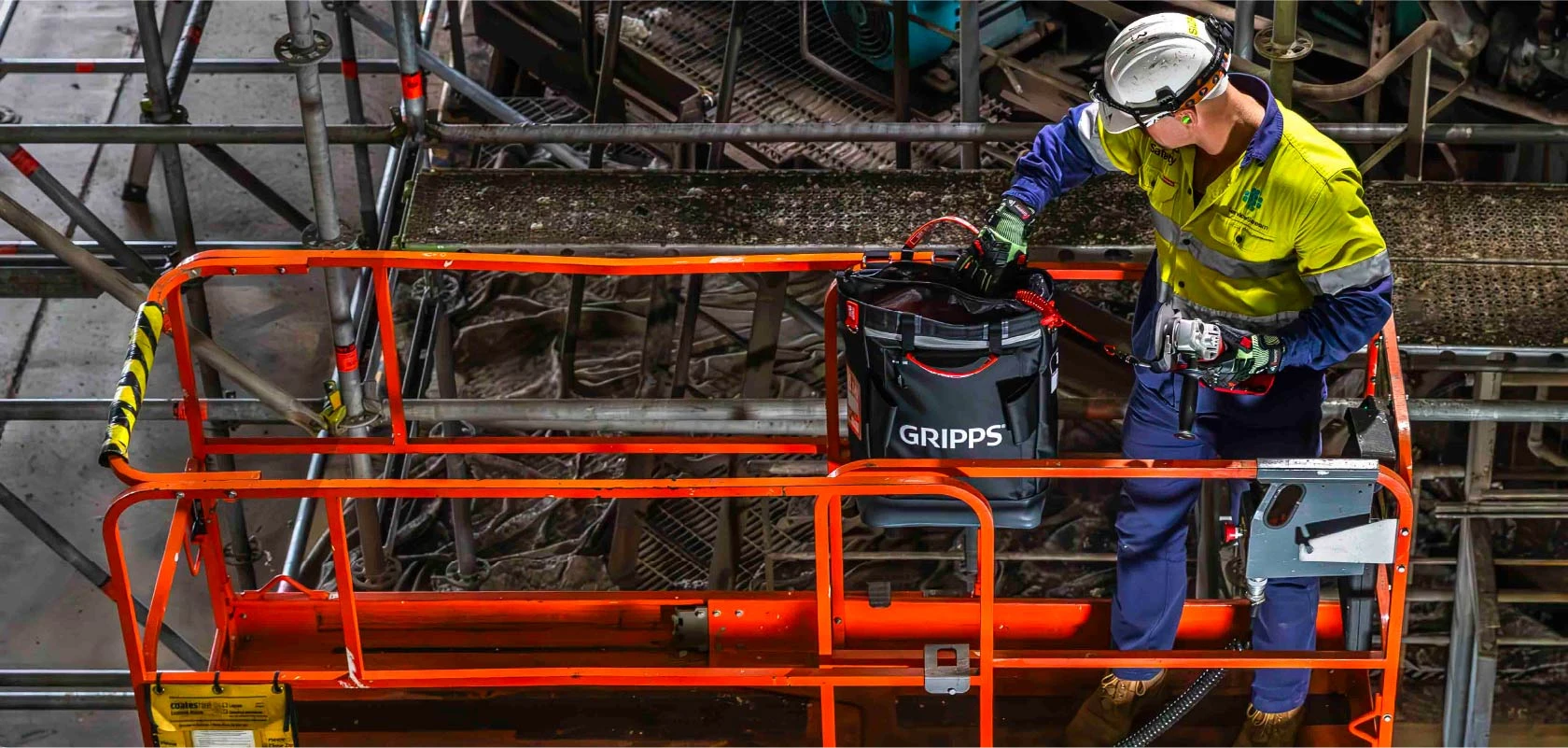
Plan four stages of containment
Parts need control during transport, access at the work position, removal and return. Choose containers that can be closed for transfers and positioned for the task. Keep new components, removed components and waste separate where this helps accountability.
Match access to the task
A container is only useful when the worker can retrieve parts without tipping it or leaving it open. Review working gloves, access direction and the worker’s position. A rail bag, belt pouch and larger transport container may address different stages of the same job.
Review loaded weight and attachment
Count the container, contents and any attachments in the load. Confirm the selected model’s documented rating and mounting arrangement. Do not hang a loaded container from an arbitrary tool tether or guardrail connection without reviewing the complete arrangement.
Keep the floor and work surface clear
Removed fasteners, packaging and consumable remnants can become loose objects. Provide a place for them before work begins. Avoid temporary storage on grating, platform edges, ladders or the top of equipment.
Close the job with a count
Use an issue and return routine for critical parts and tools. Investigate missing items before reopening the space below or returning equipment to service under the site’s procedure. Product containment supports the routine; it does not replace it.
Turn the review into a product enquiry
Send PSC the task photographs, tool inventory and weights, fixture details or opening dimensions. Include the operating environment, required quantity and delivery location so the appropriate product configuration can be reviewed.